
The best shooting glasses aren’t the ones with the most impressive marketing — they’re the ones you’ll actually wear every session, that fit your face, and that carry a rating meaning something. Most people buy on looks and price, then discover the fog problem, the gap problem, or that the label on the box didn’t say what they assumed. This guide covers what the standards actually test, how to pick lens tints, and eight options across the situations people actually shoot in.
The thing almost everyone gets wrong
“ANSI Z87.1 compliant” or “Z87+ rated” does not mean ballistic-rated.
Z87+ is an industrial high-impact rating. MIL-PRF-32432 is a military ballistic-fragmentation standard. Both matter, but they test different threats — and a lot of products use “ballistic” in marketing copy while only claiming Z87+.
Details below, because this is the single most useful thing to understand before you spend money.
On this page
How we researched this
This guide draws on published standards documentation, manufacturer specifications, and retail listings. Where we could verify a specific product’s rating, we state it. Where we couldn’t, we say so — which is the same thing we’re telling you to do before buying.
We haven’t impact-tested these ourselves. Ratings vary by model and lens configuration within a product line, so verify the specific item you’re purchasing.
What the Ratings Actually Mean
Two standards matter, and understanding the difference changes what you buy.
ANSI Z87.1 — The Industrial Standard
This is the American National Standards Institute specification for eye protection, and it’s what nearly every pair of shooting glasses on the market claims. The “+” suffix is the part that matters — it indicates the eyewear met the high-impact requirements.
Among the Z87+ tests is a high-velocity impact test using a ¼-inch steel ball fired at 150 feet per second, with no shattering, cracking, or lens dislodgement permitted. There’s also a high-mass test where a pointed weight is dropped onto the eyewear, plus requirements covering optical quality, luminous transmittance, refractive power, and haze.
Z87+ compliance isn’t a single test — it’s a set of them.
The plus is the part that matters
Z87 — basic impact. Z87+ — high-impact rated. Z87-2+ — prescription lenses, high-impact.
A listing that says “ANSI Z87.1” without the plus is telling you it met the basic standard, not the high-impact one. For shooting, high-impact is the point.
MIL-PRF-32432 — The Ballistic Standard
This is the U.S. military performance specification for combat eye protection, and it asks a different question.
The test: a 0.15-caliber, 5.85-grain fragment simulator fired at roughly 640 to 660 feet per second for spectacles. Goggles face an even more demanding version.
MIL-PRF also specifies optical clarity, UV protection, chemical resistance, environmental stability across temperature and humidity ranges, and practical requirements like being disinfectable and free of distracting designs.
Why the projectile matters as much as the speed
A ¼-inch steel ball is relatively large. It spreads force across a wider area and behaves like a blunt impact — the question is whether the lens holds together.
The smaller, much faster fragment simulator concentrates the impact over a smaller area, creating a very different challenge for the lens.
Those are different failure modes, which is why one standard doesn’t simply replace the other.
The Standards Aren’t Nested
Here’s the part that trips people up: passing MIL-PRF doesn’t automatically mean a product is Z87+ rated, and vice versa.
Gatorz, for example, publishes a model meeting MIL-PRF-32432A ballistic requirements that is not ANSI Z87+ rated. They’re separate certifications with separate test protocols and separate additional requirements.
So “stronger” isn’t as simple as it sounds. Check for the specific marking you want rather than assuming one implies the other.
How to verify a claim
Look for the required Z87+ markings on the eyewear itself — not merely a claim on the box or in a retail listing.
And watch for the word “ballistic” used as marketing rather than as a standard. Plenty of listings describe glasses as “ballistic tactical” while only claiming Z87+. If a product genuinely meets a military spec, the listing will usually name it — MIL-PRF-32432, MIL-PRF-31013, or APEL listing.
Which Do You Actually Need?
Match the Rating to the Shooting
Range shooting, plinking, hunting? ANSI Z87+ is the appropriate standard, and it’s what the overwhelming majority of shooting glasses carry.
Steel targets at close range? Start with Z87+ and consider ballistic-rated protection — spatter comes back.
Tactical training, force-on-force, or professional use? A military ballistic specification is the standard designed for that risk profile.
Reloading or gunsmithing? Z87+ covers it. That’s exactly the industrial hazard the standard was written for.
Airgun and BB shooting? Z87+, and take it seriously — steel BBs ricochet and eye injuries in that category are common.
The Prescription Problem
This is the most underserved question in the category, and the answer is more specific than most guides admit.
Ballistic ratings are tested on plano lenses
MIL-PRF-32432 testing uses plano — non-prescription — lenses. That means the ballistic rating describes the frame platform and its tested clear shield, not a prescription version of that lens.
So a prescription pair built on a ballistic frame isn’t automatically ballistic-rated. The defensible claim for prescription tactical eyewear is ANSI Z87+ high-impact, marked Z87-2+ for impact-rated prescription lenses.
For ballistic systems designed to accommodate prescriptions, the usual solution is an Rx insert worn behind the tested protective shield rather than replacing that shield with prescription lenses.
For most shooters that’s more complexity than the situation requires. The practical options:
Wear over-the-glasses eyewear. Purpose-built OTG glasses and goggles fit over prescription frames. Least expensive, works immediately, slightly bulkier.
Get prescription safety glasses marked Z87-2+. More comfortable, more expensive, appropriate for range and industrial use.
Use contacts under standard shooting glasses. The simplest answer if contacts work for you.
Lens Tints by Situation
Tint isn’t cosmetic — it changes what you can see, and the right one depends on where you’re shooting.
| Tint | Best For | What It Does |
|---|---|---|
| Clear | Indoor ranges, low light, dusk | Maximum light transmission, no color shift |
| Amber / Yellow | Overcast, low light, clay targets | Increases contrast, makes orange targets pop |
| Smoke / Gray | Bright sun, outdoor range | Reduces overall brightness without shifting color |
| Vermilion / Rose | Clay shooting against varied backgrounds | Heightens orange and red contrast |
| Copper / Brown | Mixed outdoor conditions | Contrast plus glare reduction |
For a general-purpose first lens, clear is the safest choice. It works indoors, at dusk, and outdoors without leaving you unable to see. If most of your shooting is outdoors in bright sun, smoke or gray may make more sense as a starting point.
Amber is a useful second tint for overcast conditions and contrast, particularly against green backgrounds.
That’s why interchangeable-lens sets are good value — you’re buying the frame once and the tints together.
The Picks Compared
Since the rating is the whole point, here it is up front.
| Pick | Rating | Best For |
|---|---|---|
| Oakley SI Ballistic Shocktube | MIL-PRF-32432 | Established ballistic pedigree |
| Pit Viper OG 2.0 | Listing states MIL-SPEC Z87+, MIL-PRF | Lower-priced ballistic claim |
| Walker’s Sport 4-Lens | Exceeds ANSI Z87.1-2003 High Impact | Best value, every lighting condition |
| HexArmor VS300 | ANSI Z87.1:2020, Z87+ | Adjustable fit |
| Klein Tools 03006 OTG | ANSI Z87.1+ and CSA Z94.3 | Over prescription glasses |
| Champion Youth 40620 | MIL-PRF-31013 3.5.1.1; Z87.1 | Smaller faces |
| OneTigris OTG Goggles | Listing states ANSI Z87.1 — verify | Sealed coverage over glasses |
| ONNAIS + Earplugs | Listing states ANSI Z87.1+ — verify | Eye and ear in one purchase |
Why some rows say “verify”
We could confirm ratings for most of these from manufacturer documentation. For a couple, the only source is a retail listing — and listing copy isn’t the same as a marking on the product.
Rather than restate a claim we can’t back, we’re flagging it. That’s the same habit this article recommends: check the markings on the eyewear itself before you rely on a rating.
Eight Options by Need
Oakley SI Ballistic Shocktube — Established Ballistic
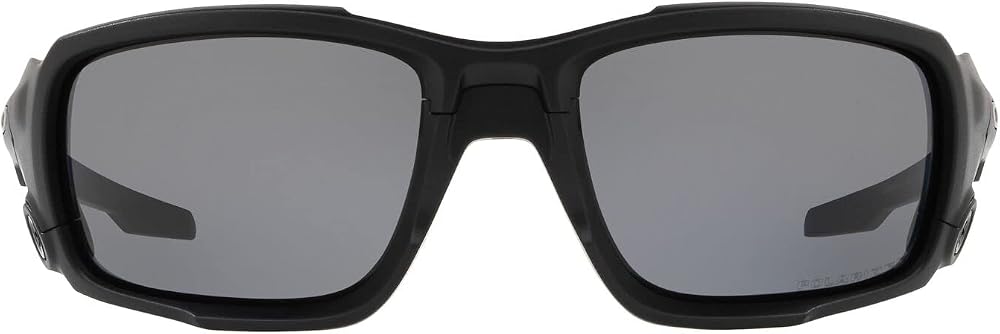
Rating: MIL-PRF-32432
Best for: Buyers who want an established name behind the ballistic claim.
Oakley SI is Standard Issue — the division producing eyewear specifically for military and law enforcement use, distinct from Oakley’s consumer sunglasses. “Ballistic” appears in the product name rather than only in marketing copy, and the product information identifies MIL-PRF-32432 compliance.
That’s the current military ballistic specification, and it’s the clearest ballistic claim of anything here. If you want that tier from a manufacturer with documentation behind it, this is the straightforward answer.
It’s also the most expensive option in this guide, which is the honest tradeoff.
Check the Oakley SI Shocktube on Amazon →
Pit Viper OG 2.0 — Lower-Priced Option

Rating: Listing states MIL-SPEC Z87+ and MIL-PRF
Best for: Ballistic-tier claims without Oakley pricing.
This listing names both standards in the title, which matters more than it sounds — Pit Viper sells the Original 2.0 in multiple lens configurations, and the rating varies between them. Some are Z87+ only; the ballistic versions are separate products.
We’re reporting what the listing states rather than independently confirming which manufacturer configuration this ASIN represents. A platform name isn’t a rating. Confirm the specific configuration states the standard before you buy — on this or anything else in the category.
The styling is polarizing and the brand leans into that. The rating isn’t a style question.
Check the Pit Viper OG 2.0 on Amazon →
Walker’s Sport 4-Lens — Best Value

Rating: Published spec states it exceeds the ANSI Z87.1-2003 High Impact Requirement
Best for: Covering every lighting condition without buying four pairs.
This is the practical answer for most people. One frame, four lens tints, and you swap based on where you’re shooting — clear indoors, amber on an overcast day, smoke in bright sun.
Worth noting the published claim references the 2003 edition of the standard, which has been revised since. That’s not a knock — it’s the specification the manufacturer publishes, and we’re reporting it as stated rather than translating it into a current marking we haven’t verified.
Walker’s is a known name in range gear and the price makes it easy to keep a set in a range bag. If you’re outfitting a family or hosting guests, buying two is still inexpensive.
Check the Walker’s Sport set on Amazon →
HexArmor VS300 — Adjustable Fit

Rating: ANSI Z87.1:2020, high impact Z87+
Best for: Anyone who’s never found glasses that sit right.
HexArmor is designed as industrial safety eyewear rather than shooting-specific eyewear, and the adjustable side arms are why it’s here. Fit is the reason people stop wearing eye protection, and adjustability addresses more fit problems than any other single feature.
HexArmor publishes the rating against the 2020 edition of the standard with multiple inclination adjustments and anti-fog coating options — some of the clearest documentation among these picks.
Check the HexArmor VS300 on Amazon →
Klein Tools 03006 — Over Prescription Glasses
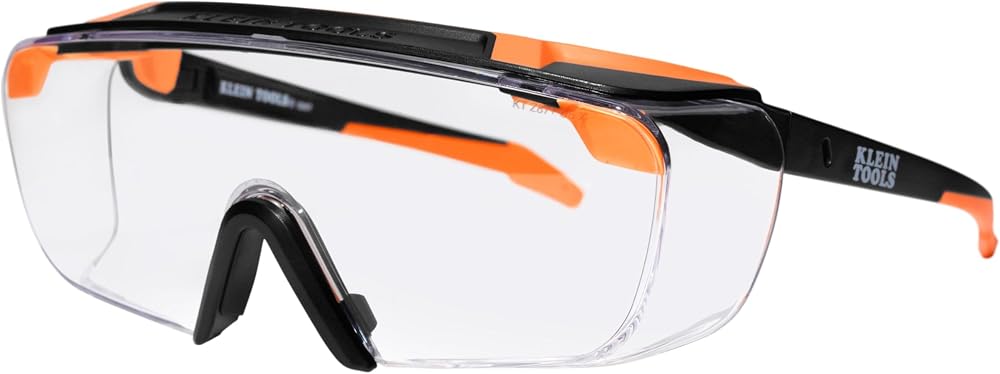
Rating: ANSI Z87.1+ and CSA Z94.3 certified
Best for: Prescription wearers who want a rating they can actually verify.
This is the pick that solves the prescription problem cleanly. OTG — over the glasses — designs use wider temples and a deeper lens to fit over a prescription frame, and Klein lists ANSI Z87.1+ plus CSA Z94.3, the Canadian equivalent.
That matters because a lot of OTG eyewear claims plain “ANSI Z87.1” without the plus, which is the basic standard rather than the high-impact one. Klein is a tool brand whose buyers are tradespeople — they publish the rating because their customers need it to be real.
Anti-fog and scratch-resistant coating, clear lens, UV protection. The tradeoff with any OTG design is bulk, and they’re more fog-prone because there’s a second lens surface and less airflow. Plan on anti-fog treatment.
Check the Klein Tools 03006 on Amazon →
Champion Youth 40620 — Smaller Faces

Rating: MIL-PRF-31013 3.5.1.1 ballistic resistance; Z87.1
Best for: Young shooters, and adults with narrower faces.
Adult glasses on a smaller face create gaps at the temples and slide down the nose — which means they get pushed up constantly, or taken off. Neither is protection.
What makes these more interesting than typical youth eyewear is the rating. Champion’s model 40620 documentation cites MIL-PRF-31013 ballistic resistance alongside Z87.1 — a genuine military eyewear specification.
One distinction worth making: MIL-PRF-31013 is an older military standard than MIL-PRF-32432, the current spec. That’s not a reason to dismiss it, but it isn’t the same claim as a current-32432-rated product, and we’d rather name it precisely than lump them together.
Clear lenses, which is the right choice for someone learning who needs maximum light and no color shift.
Check the Champion youth glasses on Amazon →
OneTigris OTG Goggles — Sealed Coverage

Rating: Listing states ANSI Z87.1 — verify the marking
Best for: Prescription wearers who want a seal, or anyone shooting in dust and wind.
Goggles do something glasses can’t: they seal against your face. That matters for airsoft, dusty outdoor ranges, and anyone who’s had debris come around the side of a lens.
These fit over prescription frames and ship with three lens tints. Note the listing states ANSI Z87.1 without specifying the plus — check the markings on the goggles before relying on them for high-impact protection.
The other tradeoffs are heat, fog risk, and the fact that goggles are less comfortable to wear all day than glasses.
Check the OneTigris OTG goggles on Amazon →
ONNAIS with Earplugs — Eye and Ear Together

Rating: Listing states ANSI Z87.1+ — verify the marking
Best for: A complete protection setup in one purchase, or a spare kit for guests.
This one solves a specific problem elegantly. As covered in the fit section, temple arms can break the seal on over-ear muffs — which quietly costs you hearing protection you think you have.
Pairing glasses with NRR 32dB earplugs sidesteps that conflict entirely, since plugs sit inside the ear canal and don’t care what your temples are doing.
It’s also the sensible thing to keep in a range bag for someone you’ve brought along. Plugs alone are less protective than plugs-plus-muffs at an indoor range, so for high-volume indoor sessions consider doubling up — our ear protection guide covers that.
Check the ONNAIS set on Amazon →
Fit and Coverage
Fit is the reason people stop wearing eye protection, so it deserves more attention than tint.
No gaps at the temples. Debris and spatter don’t always come from directly in front. Wrap-around designs and side shields exist for a reason.
They shouldn’t slide. Glasses that creep down your nose get pushed up mid-string or set aside entirely. Rubber nose pieces and temple grips help; adjustable arms help more.
Compatibility with hearing protection. This one surprises people. Thick temple arms break the seal on over-ear muffs, which costs you real hearing protection. Thin, flat temples are the fix — and it’s worth testing your glasses and muffs together before you rely on both.
Our roundup of shooting ear protection covers the hearing side, including electronic options.
The test that matters
Put the glasses on, shoulder a rifle or take a shooting grip, and look through them the way you actually will.
A frame that sits fine casually can put the top rim right through your sight picture in a shooting position. That’s the thing you can’t tell from a product photo.
The Fog Problem
Every shooting glasses review eventually mentions fog, because it’s the complaint that comes up more than any other.
Why it happens: warm, humid air from your face meets a cooler lens surface. Cold weather makes it worse, exertion makes it worse, and anything that restricts airflow — a mask, a goggle seal, an OTG design over another frame — makes it much worse.
Anti-fog coatings help but wear off. Factory coatings degrade with cleaning, especially if you’re wiping lenses with a shirt tail. That’s the other thing that quietly destroys eyewear: microscratches from improper cleaning eventually make a lens hazy.
The cheapest upgrade to eyewear you already own

A dedicated anti-fog treatment can make an otherwise usable pair of glasses considerably more comfortable in cold or humid conditions. If you shoot in cold weather or wear OTG eyewear, this is the accessory that changes the experience.
Pre-moistened anti-fog wipes are the simpler version — less thorough than a full treatment, but they live in a range bag and take no thought.
Two habits that cost nothing: don’t wipe lenses with your shirt, and let glasses acclimate to outdoor temperature before you start shooting rather than pulling them from a warm car.
Frequently Asked Questions
Does ANSI Z87.1 mean bulletproof?
No. Z87.1 is an industrial impact standard — the Z87+ high-impact testing includes a ¼-inch steel ball at 150 feet per second, along with other requirements. That’s genuinely useful protection against debris, spatter, and ricochet fragments, but it isn’t a ballistic rating and no shooting glasses stop a bullet.
What does the “+” in Z87+ mean?
High impact. Plain Z87 means the eyewear met the basic standard; Z87+ means it also met the high-impact requirements, and Z87-2+ covers impact-rated prescription lenses. For shooting, the plus is the part that matters — a listing claiming “ANSI Z87.1” without it is claiming less than you probably assume.
What’s the difference between Z87+ and MIL-PRF-32432?
Different tests for different threats. Z87+ testing includes a ¼-inch steel ball at 150 fps — a larger, slower, blunt impact — plus high-mass and optical requirements. MIL-PRF-32432 fires a 0.15-caliber, 5.85-grain fragment simulator at roughly 640–660 fps, concentrating impact over a much smaller area. Different failure modes, not simply different severity levels.
If glasses are MIL-PRF rated, are they automatically Z87+?
No — the standards aren’t nested. Gatorz publishes a model meeting MIL-PRF-32432A ballistic requirements that isn’t ANSI Z87+ rated. They’re separate certifications with separate protocols. Check for the specific marking you want rather than assuming one implies the other.
Is “ballistic” in a product name meaningful?
Not by itself. Plenty of listings describe glasses as “ballistic tactical” while only claiming Z87+, which is an industrial impact rating rather than a ballistic one. If a product genuinely meets a military spec, the listing usually names it — MIL-PRF-32432, MIL-PRF-31013, or APEL listing. A word in the product title isn’t a standard.
How do I verify a pair is actually Z87+ rated?
Look for the required markings on the eyewear itself rather than a claim on the box or in a retail listing. If a listing claims a rating and you can’t find the marking referenced in the specifications or visible in photos, treat it as unverified until you have the product in hand.
What if I wear prescription glasses?
Three options. Over-the-glasses eyewear fits over your existing frames — cheapest and works immediately, and worth choosing one that states Z87+ rather than plain Z87.1. Prescription safety glasses marked Z87-2+ are more comfortable and more expensive. Or contacts under standard shooting glasses. Note that ballistic ratings are tested on plano lenses, so a prescription pair on a ballistic frame isn’t automatically ballistic-rated — for systems designed to accommodate it, an Rx insert behind the tested shield is the usual solution.
What lens color should I get?
Clear is the safest general-purpose first lens — it works indoors, outdoors, and at dusk. If you shoot mostly outdoors in bright sun, smoke or gray may suit you better. Amber is a useful second tint for overcast conditions and contrast. Interchangeable-lens sets are good value since you’re buying the frame once.
Why do my shooting glasses fog?
Warm humid air from your face meeting a cooler lens. Cold weather, exertion, masks, goggle seals, and OTG designs all make it worse. Factory anti-fog coatings wear off over time, particularly with improper cleaning. A dedicated anti-fog treatment usually helps more than buying more expensive glasses that also fog.
Will my glasses work with ear muffs?
Depends on the temple arms. Thick arms break the seal on over-ear muffs, which costs you hearing protection you think you have. Thin, flat temples are designed around this — test your glasses and muffs together before relying on both. Pairing glasses with earplugs instead avoids the conflict entirely.
Do I need eye protection for airguns and BB guns?
Absolutely. Steel BBs ricochet readily off hard surfaces and airgun eye injuries are common. Z87+ is the appropriate standard, and everyone in the area needs it — not just the shooter. Our BB gun guide covers the risks in that category.
Can I just use regular sunglasses?
No. Standard sunglasses aren’t impact rated, and a lens that shatters puts fragments where you least want them. The whole point of the Z87+ marking is that the lens holds together — that’s a design characteristic ordinary eyewear doesn’t have.
The Bottom Line
Get the rating right, then get the fit right, and the rest is preference.
For range and general shooting, ANSI Z87+ is the appropriate standard and the Walker’s four-lens set covers every lighting condition for the price of one decent pair.
For a ballistic-tier rating, the Oakley SI Shocktube states MIL-PRF-32432 and brings an established pedigree.
If you wear prescription glasses, the Klein Tools 03006 is the OTG pick with a rating you can verify, and OTG goggles add a seal if you need one.
If nothing has ever fit, adjustable arms like the HexArmor VS300 solve more problems than another lens tint will.
And whatever you buy: check the markings on the eyewear, test them with your ear muffs, check the sight picture in a shooting position, and treat them for fog before you need to. The best shooting glasses are the ones still on your face at the end of the session.
Continue Your Research
Authority reference: for the requirements behind eye protection in workplace and range settings, see OSHA’s eye and face protection guidance, which references the ANSI Z87.1 standard. Range rules may impose their own requirements on top of that.
Note: Standards descriptions reflect published test methods for ANSI Z87.1 and MIL-PRF-32432 as we understand them; the standards documents themselves are authoritative. Product ratings stated here come from manufacturer documentation or retail listings and are identified as such — where we could not verify a rating against manufacturer sources, we’ve flagged it rather than restated it. Ratings vary by model, lens configuration, and standard edition within a product line; verify the specific item you’re purchasing carries the markings you want on the eyewear itself. No shooting glasses stop a bullet; these standards address impact, debris, and fragmentation. Eye protection requirements vary by range and jurisdiction. We have not conducted impact testing.
Affiliate Disclosure: Some links are affiliate links; if you purchase, we may earn a small commission at no additional cost to you. Prices and availability change — verify current details before purchasing.
Thanks so much, Mark. That means a lot, and it's exactly why we write these. The 43X and 48 share…
Love hearing this, William. That's the best kind of ownership story: a gun that frustrated you at first and ended…
This one of the best gun reviews I have seen! Very informative and well said. It has helped me on…
You bet ! I absolutely love this gun now that I figured how to compensate for the wiggle! I have…
Thanks, JD, that's a fair point, and we appreciate you taking the time to share it. The 22 suppressor market…


