Best Handgun For Beginners: Choosing Your First Pistol or Revolver


You’ve decided to buy your first handgun, but the options feel overwhelming. Semi-auto or revolver? .22 LR or 9mm? Compact or full-size? Every gun counter has a dozen “perfect beginner guns,” and online forums argue endlessly about which handgun for beginners actually makes sense.
Here’s the reality: the best handgun for beginners depends entirely on what you’re trying to accomplish. A .22 LR pistol that’s perfect for building fundamentals cheaply might be inadequate for home defense. A 9mm compact that works great for carry might punish someone with small hands or limited grip strength. And a revolver that’s mechanically simple might not fit modern training classes.
This guide cuts through the noise. We’ll help you figure out which category of beginner handgun fits your priorities, then point you toward specific models worth considering. No brand loyalty, no “one size fits all” answers—just honest guidance based on what actually works.

Best Handgun For Beginners: Quick Picks by Priority

Best for Learning Fundamentals: Ruger Mark IV or Browning Buck Mark (see all .22 LR pistols) – Minimal recoil, cheapest practice ammunition
Best for Home Defense: 9mm Compact Pistol – Defensive capability with manageable recoil, widely available ammunition
Best for Mechanical Simplicity: Heritage Rough Rider or Ruger Wrangler (see all .22 LR revolvers) – Fewer moving parts, ultra-affordable
Best for Full-Size Ergonomics: Full-Size 9mm – Easier to control, reduces recoil, better for learning proper grip
Best Budget Option: Heritage Rough Rider or Ruger Wrangler – Often under $200, .22 LR ammunition costs pennies per round

How we researched the best handgun for beginners: We analyzed beginner-friendly handgun characteristics across manufacturer specs, firearms instructor recommendations, range rental popularity data, CCW course feedback, and thousands of verified owner reviews. We focused on fit, recoil management, reliability, cost of practice, and learning curve rather than brand prestige or marketing claims.

⚡ Short on Time?

Most beginners should start with a .22 LR semi-auto pistol to build fundamentals affordably. The Ruger Mark IV and Browning Buck Mark are proven choices. Low recoil and cheap ammunition let you practice proper grip, trigger control, and sight alignment without developing a flinch.
Compare all .22 LR pistol options →

On this page

Red Flags: Beginner Handgun Mistakes to Avoid

🚩 Starting with too much gun – Jumping straight to .45 ACP or full-power magnum revolvers teaches you to flinch, not shoot accurately. Recoil management is a learned skill.

🚩 Buying based on brand loyalty instead of fit – Your buddy’s favorite Glock might not fit your hand. Rent or borrow different options before committing hundreds of dollars.

🚩 Skipping .22 LR entirely – “Real guns shoot real calibers” is macho nonsense. Olympic-level shooters train with .22 LR because fundamentals matter more than caliber size.

🚩 Ignoring grip size and hand strength – Compact carry guns often have aggressive recoil and hard-to-reach controls for smaller hands. Start with what you can actually control.

🚩 Not budgeting for practice ammunition – A $500 9mm sounds reasonable until you realize practice ammo runs $15-25 per 50 rounds. Budget matters for long-term skill development.

🚩 Choosing based on carry potential before learning to shoot – Tiny pocket .380s seem appealing until you realize they’re harder to shoot well than full-size guns. Learn first, carry later.

What Makes the Best Handgun For Beginners?

Before diving into specific categories, let’s establish what actually matters when you’re learning to shoot.

What We Looked For

When evaluating beginner-friendly handguns, we focused on these key criteria:

  • Recoil management: Lower recoil lets you focus on fundamentals (grip, trigger press, sight alignment) without fighting the gun. You’ll shoot more accurately and practice longer without fatigue or flinching.
  • Ergonomics and fit: The gun should fit your hand naturally. Controls (slide release, magazine release, safety if present) should be reachable without shifting your grip. Being too big or too small creates bad habits.
  • Simplicity of operation: Fewer steps between “gun in hand” and “ready to fire” means less to remember under stress. This is why many instructors recommend striker-fired pistols or double-action revolvers for beginners.
  • Cost of practice: Skill development requires repetition. A gun that shoots $0.06/round ammunition (.22 LR) lets you practice 10x more than one that shoots $0.60/round ammunition (some defensive calibers). Budget matters.
  • Availability and support: Common platforms have abundant holsters, accessories, instructional videos, and aftermarket support. Obscure models leave you troubleshooting alone.
  • Reliability: Beginners blame themselves when guns malfunction. A reliable platform builds confidence. We prioritized proven designs with strong track records.

Not Sure Which Beginner Handgun You Need?

→ Want to build fundamentals without breaking the bank?
Go with Ruger Mark IV or compare all .22 LR pistols – Practice costs pennies per round
→ Need a defensive handgun you can actually learn to shoot well?
Choose 9mm Compact Pistol – Balances stopping power with manageable recoil, widely available training classes
→ Want maximum mechanical simplicity and reliability?
Pick Heritage Rough Rider or compare all .22 LR revolvers – Point and pull trigger, ultra-affordable
→ Need easier recoil control and better ergonomics while learning?
Try Full-Size 9mm – Heavier weight absorbs recoil, longer sight radius aids accuracy, more forgiving grip
→ Budget under $300 total, including ammunition?
Start with Heritage Rough Rider – Often under $200, .22 LR ammo lets you shoot 500+ rounds for $30
→ Still completely overwhelmed?
Ruger Mark IV or Browning Buck Mark are safe bets for 90% of beginners – proven designs, affordable practice, easy to shoot well

Best Handgun For Beginners: Category Breakdown

Let’s break down each category with honest tradeoffs and realistic expectations. These aren’t full product reviews—those live in our dedicated guides linked below. This is a decision-making framework.

1. .22 LR Semi-Auto Pistols – Best For Building Fundamentals

Who This Is For: Anyone serious about developing good shooting habits affordably. New shooters who want to practice without flinching. Experienced shooters are adding a dedicated trainer.
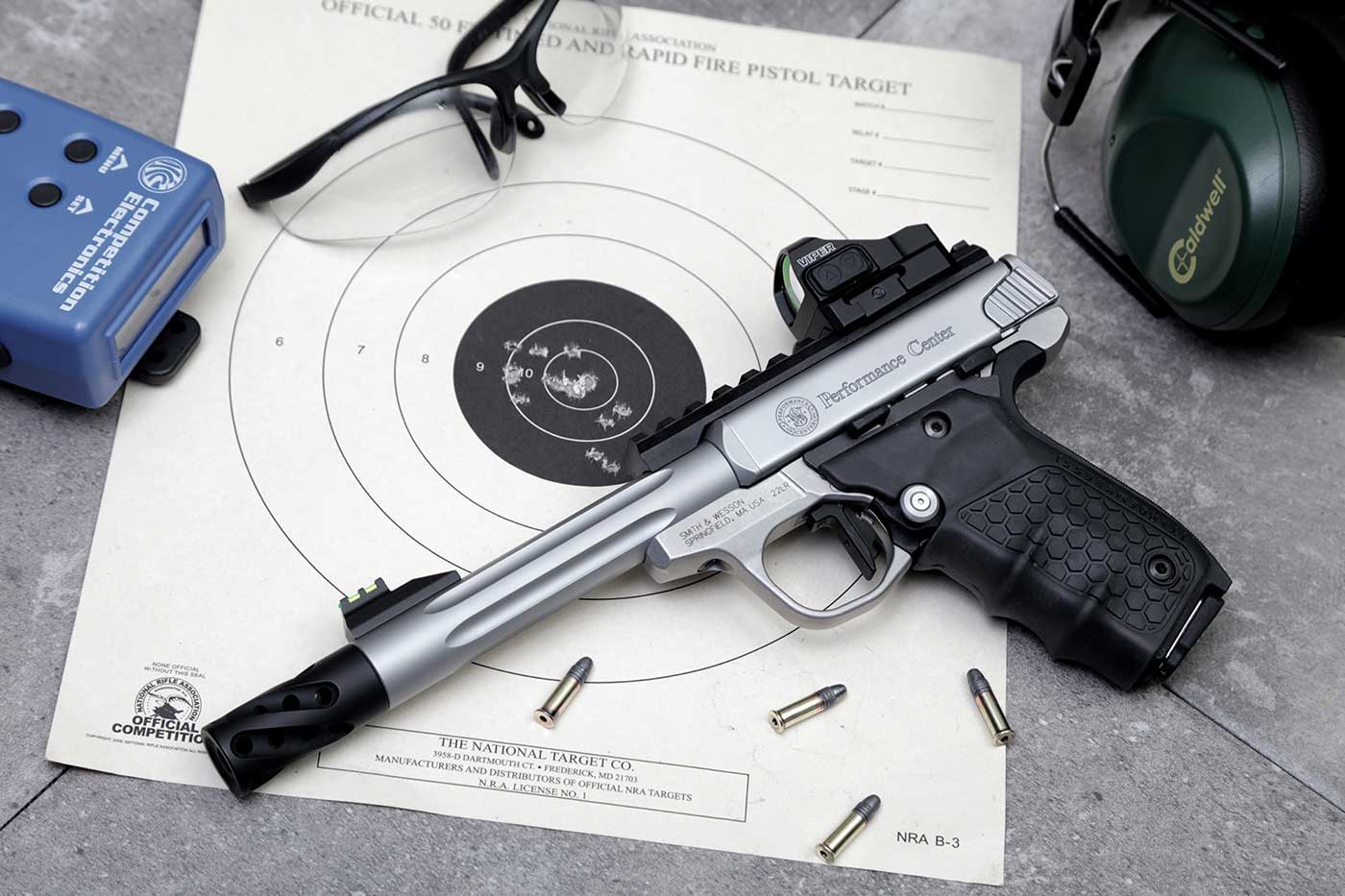
A quality .22 LR pistol is the single best tool for learning to shoot handguns well. The minimal recoil lets you focus entirely on grip, trigger press, and sight alignment without the gun punishing you for mistakes. You’ll shoot tighter groups, build muscle memory faster, and practice 10x more often because ammunition costs $0.05-0.08 per round instead of $0.40-0.60.
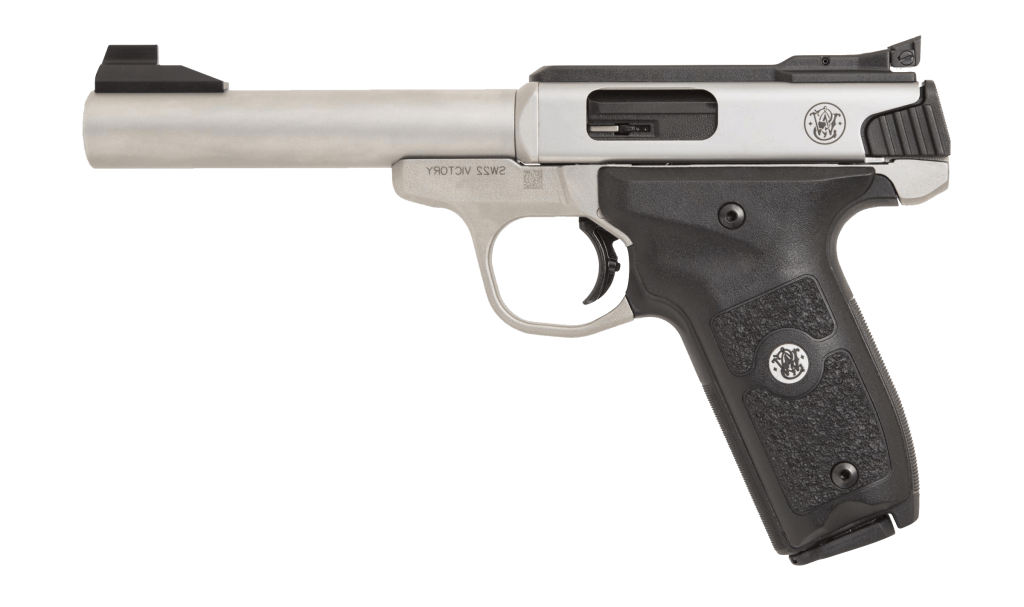
The Ruger Mark IV, Browning Buck Mark, and Smith & Wesson SW22 Victory dominate this category for good reason. They’re accurate enough for competition, reliable enough for daily range use, and easy enough to maintain that you won’t avoid cleaning them. Aftermarket support is extensive—better sights, trigger upgrades, threaded barrels for suppressors.
Here’s when this helps: If you’re practicing twice a month with a 9mm at $25 per range session (ammunition only), you’re spending $600/year to shoot maybe 2,400 rounds. Switch to .22 LR, and that same $600 buys you 10,000+ rounds. The skill difference after a year is dramatic.
The honest limitation: A .22 LR pistol won’t serve double-duty as a defensive handgun. The rimfire cartridge isn’t reliable enough for that role, and most .22 pistols are too bulky for concealed carry anyway. This is a training tool, not a defensive tool. Many shooters solve this by owning both.22 LR for practice, 9mm for carry.
Typical cost: $300-500 for the gun, $30-40 per 500 rounds of ammunition
→ See our complete guide to the best .22 LR pistols

2. 9mm Compact Pistols – Best For Defensive Learning

Who This Is For: Beginners whose primary goal is home defense or eventual concealed carry. People are willing to budget more for practice ammunition. Those who want one gun that does multiple jobs.
The 9mm compact strikes the balance most defensive handgun instructors recommend: enough power for serious use, manageable enough recoil that most adults can learn to shoot it well, and ammunition availability that won’t leave you searching during shortages.
The Glock 19 essentially defines this category—it’s the Toyota Camry of handguns. Boringly reliable, parts everywhere, every holster maker supports it, and it just works. The SIG P365 revolutionized the micro-compact space by cramming 10-15 rounds into a truly concealable package. The Smith & Wesson M&P9 Shield offers similar capability at a lower price point.
Real-world scenario: You take a beginner handgun course (most require centerfire calibers, not .22 LR). You practice with the same gun you’ll actually carry. You’re not juggling different manual of arms or building muscle memory on a platform you’ll never use defensively. The learning curve is steeper than .22 LR, but you’re building directly applicable skills.
The Real Talk on 9mm for Beginners
A 9mm compact will absolutely teach you to shoot if you commit to practice. The recoil is manageable—sharper than .22 LR but not punishing like .40 S&W or .45 ACP. Most adults can handle it fine with proper instruction. That said, ammunition costs add up fast. Budget $20-30 per range session just for ammo, and you’ll need regular sessions to build proficiency. If money is tight, you’ll shoot less, progress slower, and possibly develop a flinch from trying to “tough out” recoil you’re not ready for. There’s no shame in starting with .22 LR, getting 1,000 rounds of good reps, then stepping up to 9mm once fundamentals are solid. But if your timeline demands defensive capability now and budget allows consistent practice, a quality 9mm compact is a legitimate first gun.
Typical cost: $400-600 for the gun, $20-30 per 100 rounds of practice ammunition
→ Best 9mm options for beginners: Glock 19, SIG P365, Smith & Wesson M&P9 Shield, Springfield Hellcat (Full comparison guide coming soon)

3. .22 LR Revolvers – Best For Mechanical Simplicity

Who This Is For: People intimidated by semi-auto complexity. Budget-conscious beginners. Those wanting a “just works” introduction to handguns. Cowboy action shooting enthusiasts.
You load the cylinder, you pull the trigger, it goes bang. No magazines to insert correctly, no slide to rack, no “is there one in the chamber?” confusion. Revolvers are conceptually simple in ways that reduce cognitive load for true beginners.
The Heritage Rough Rider and Ruger Wrangler represent absurd value—often under $200 for a functional, reasonably accurate handgun. They’re single-action (you manually cock the hammer before each shot), which slows you down and reinforces deliberate shooting. The cowboy aesthetic appeals to people who find modern pistols sterile or intimidating.
You’ll appreciate this if: You’re teaching a teenager or someone completely new to guns and want to remove variables. Every shot requires a conscious decision to cock the hammer. There’s no “I didn’t know it was loaded” with an empty cylinder staring back at you. The manual operation builds understanding of how guns actually work.
What .22 LR Revolver Owners Say
Why people stick with them:

  • “I can hand this to anyone at the range and explain how it works in 30 seconds—no confused looks, no safety lever questions.”
  • Ultra-reliable with any ammunition brand (no magazine feed issues or ejection failures)
  • The single-action trigger teaches patience and deliberate shooting—you can’t rapid-fire your way to bad habits
  • Incredibly affordable—$150-200 guns that work, $20 buys 400 rounds of practice ammo

Why some pass:

  • Single-action manual cocking feels antiquated if your goal is modern defensive shooting
  • Slow to reload (loading gates, not speed loaders) makes range practice tedious after 100+ rounds
  • Won’t translate to modern carry guns—completely different manual of arms from striker-fired pistols
  • The cowboy aesthetic either appeals to you or it doesn’t—these aren’t neutral-looking tools

Typical cost: $150-300 for the gun, $30-40 per 500 rounds of ammunition
→ See our complete guide to the best .22 LR revolvers

4. Full-Size 9mm Pistols – Best For Learning Recoil Management

Who This Is For: Beginners with larger hands. Home defense focus (not concealed carry). People who want maximum shootability in a defensive caliber. Range-only guns.
Bigger guns are easier to shoot well. The extra weight absorbs recoil, the longer sight radius (distance between front and rear sights) makes aiming more forgiving, and the full-size grip gives you more contact surface for control. If you’re not planning to carry concealed, there’s no reason to suffer with a compact.
The Glock 17, SIG P320 Full-Size, Smith & Wesson M&P9 (full-size), and CZ 75 represent the category. They’re what competitive shooters choose when size isn’t a constraint. They’re what police departments issue when they want officers to shoot qualification courses cleanly. They’re what ranges keep as rentals because they’re nearly indestructible.
This matters when: You’re learning proper two-handed grip and stance. The extra grip length gives your support hand full contact instead of dangling fingers. The added weight keeps the muzzle flatter during recoil, so you can watch your sights through the shot and call your hits. You’ll develop good habits faster because the gun isn’t fighting you.
Who This Works For / Who Should Skip It
This upgrade makes sense if: You’ve got large hands and compact guns feel cramped. Your primary use case is home defense or range practice—you’re not trying to conceal a 4-pound brick on your hip every day. You want the easiest path to shooting a defensive caliber well, and size doesn’t matter. You’re willing to dedicate safe storage space to a larger gun. Many beginners who start here find the forgiving nature of a full-size 9mm accelerates their learning curve enough to justify never buying a compact.
You can probably skip this if: Your hands are small to medium and the grip feels like holding a 2×4. Concealed carry is your end goal and you’ll just end up buying a compact later anyway—better to learn on what you’ll actually use. You’re budget-limited and would rather spend the difference on more ammunition and training. You already know from renting that compact 9 mm’s feel manageable—the full-size advantage won’t matter enough to justify the added bulk.
Typical cost: $450-700 for the gun, $20-30 per 100 rounds of practice ammunition
→ Best full-size 9mm options: Glock 17, SIG P320 Full-Size, Smith & Wesson M&P9, CZ 75 SP-01 (comparison guide coming soon)

5. .38 Special Revolvers – Best For Point-and-Shoot Simplicity

Who This Is For: People who want defensive capability without semi-auto complexity. Those with limited hand strength who struggle with racking slides. A bedside gun for someone who won’t practice regularly.
A .38 Special revolver bridges the gap between “mechanically simple” and “defensive capable.” Load five or six rounds, pull the trigger, it fires. No external safeties to remember, no slide to rack, no magazine springs to wear out. For someone who wants a defensive handgun but won’t commit to regular training, this reduces failure points.
The Ruger LCR and Smith & Wesson 642/442 Airweight dominate the lightweight carry revolver market. The heavier Ruger GP100 and Smith & Wesson Model 10/64 offer easier recoil management for learning. All fire the same .38 Special cartridge—adequate for defense, less punishing than 9mm +P for practice.
Is A .38 Special Revolver Worth It for You?
Ask yourself:
1. Will you actually practice regularly with a semi-auto, or are you buying a “set it and forget it” defensive tool?
If the honest answer is “I’ll shoot it once to make sure it works, then it lives in the nightstand,” a revolver makes sense. No springs to weaken, no magazines to track, no “did I chamber a round?” confusion at 3 am. But if you plan regular range sessions, you’ll get frustrated with slow reloads and limited capacity compared to modern pistols.
2. Do you have the hand strength to rack a semi-auto slide under stress?
Arthritis, limited grip strength, or unfamiliarity with proper racking technique make semi-autos harder to operate. A double-action revolver just requires trigger-pulling strength. But know that lightweight .38 snubbies have sharp recoil—heavier revolvers are easier to shoot well.
3. Are you willing to accept 5-6 rounds as enough, or do you want modern capacity?
Statistically, most defensive encounters don’t require reloads. But “most” isn’t “all,” and revolver reloads are slow even with speed loaders. A compact 9mm gives you 10-15+ rounds and faster reloads. The capacity question is personal—just make sure your choice aligns with your actual threat model, not Hollywood scenarios.
Typical cost: $400-600 for the gun, $25-35 per 100 rounds of practice ammunition
→ Best .38 Special options: Ruger LCR, Smith & Wesson 642 Airweight (carry), Ruger GP100 (home defense/range), Smith & Wesson Model 10 (budget/range) – Full comparison guide coming soon

Common Questions About the Best Handgun For Beginners

Should I start with .22 LR or go straight to 9mm?

If budget allows both, start with .22 LR to build fundamentals (500-1,000 rounds), then add a 9mm for defensive capability. If you can only afford one gun, your decision hinges on priority: skill development and affordable practice favor .22 LR, while immediate defensive need favors 9mm. There’s no universal “right” answer—people successfully learn on both. The key is committing to regular practice with whichever one you choose.

Is a revolver easier to learn than a semi-automatic pistol?

Revolvers are conceptually simpler (load cylinder, pull trigger) but not necessarily easier to shoot well. Double-action revolver triggers are heavier and longer than most semi-auto triggers, making accurate shooting harder for beginners. Lightweight snubnose revolvers have sharper recoil than comparable semi-autos. The simplicity advantage is real for understanding how the gun works and reducing malfunction troubleshooting, but modern striker-fired pistols (Glock, M&P, P320) are nearly as simple operationally.

What’s the best caliber for home defense as a beginner?

9mm in a full-size or compact platform balances defensive effectiveness with shootability for most beginners. It’s easier to control than .40 S&W or .45 ACP, ammunition is widely available, and capacity is typically 15-17 rounds in full-size guns. The key is choosing a gun you’ll actually practice with—an accurate hit with 9mm beats a miss with .45 ACP. If 9mm recoil is genuinely too much after trying it, .380 ACP in a quality platform (not a tiny pocket gun) is a reasonable compromise.

Do I need a full-size or compact handgun as a beginner?

Full-size if your only use case is home defense or range practice—the extra weight and grip length make learning easier. Compact if you know you’ll eventually carry concealed, and want to build skills on the gun you’ll actually use daily. Avoid subcompact/micro pistols as first guns unless you have very small hands—they’re harder to shoot well,l and you’ll develop bad habits fighting excessive recoil and short sight radius.

How much should I budget for my first handgun and training?

Plan $500-800 total for a quality beginner setup: $300-500 for the gun (quality used guns are fine), $100-200 for a basic safety/fundamentals course, $100+ for ammunition and range fees. To find certified instructors near you, check the NRA Certified Instructors directory. Budget shooters can get started with a Heritage Rough Rider or a used .22 LR pistol for under $400 total. Avoid bottom-tier brands (Taurus, SCCY, Hi-Point) for your first gun—reliability issues during the learning phase create bad habits and frustration.

Can I use my first handgun for concealed carry?

Depends on what you buy. A compact 9mm, like the Glock 19 or SIG P365, works fine for both learning and carry. A full-size 9mm or most .22 LR pistols are too bulky for comfortable concealed carry, but excellent for learning. Many people start with a learner-friendly gun (.22 LR or full-size 9mm), build skills for 6-12 months, then add a dedicated carry gun once they understand what features actually matter to them. Don’t let carry potential force you into a subcompact that’s miserable to practice with.

Should I buy a new or a used handgun for my first handgun?

Used is fine if you know what to check or bring a knowledgeable friend. Handguns from quality manufacturers (Glock, SIG, Smith & Wesson, Ruger, CZ) are extremely durable—a 10-year-old gun with 5,000 rounds through it still has 90% of its service life remaining. Avoid used guns with visible damage (cracks, bulges, excessive wear), sketchy history, or bottom-tier brands. Buying used from a reputable dealer gives you some recourse if issues arise. Factor in transfer fees if buying from a private party—sometimes the “deal” disappears after $30-50 in FFL costs.

What accessories do I need with my first handgun?

Immediately: shooting safety glasses, shooting ear protection (both essential for range use), and ammunition. Soon after: a gun-cleaning kit, a quality holster for carrying (see our holster guides), and a safe storage solution. Skip aftermarket triggers, sights, and grips until you’ve shot the gun enough to know what actually bothers you—beginners often modify guns based on internet advice rather than personal experience, wasting money on “upgrades” that don’t improve their shooting.

Final Thoughts: Choosing the Best Handgun For Beginners

The best handgun for beginners is the one that fits your hand, matches your budget for practice ammunition, and aligns with your actual use case—not the one internet strangers argue about or the one your buddy loves.
Here’s what matters more than brand or model: you’ll shoot what’s comfortable to shoot, and you’ll practice with what’s affordable to practice with. A $600 9mm that costs $30 per range session might get shot twice before it lives in your safe. A $300 .22 LR pistol that costs $6 per range session might get shot every weekend. Guess which shooter develops better skills?
Your next steps:

  • Rent 2-3 options from different categories before buying (most ranges offer this)
  • Take a basic handgun course to learn safe handling before solo practice
  • Budget for ammunition and range time—the gun is the cheap part of this hobby
  • Don’t overthink it: Ruger Mark IV (.22 LR pistol), Glock 19 (9mm compact), or Heritage Rough Rider (.22 LR revolver) are all defensible first guns that thousands of beginners successfully learned on

Ready to narrow down specific models?
✅  Best .22 LR Pistols (complete comparison)
 Best .22 LR Revolvers (complete comparison)
✅  Best Concealed Carry Guns (includes 9mm compacts)
✅  Firearms Guide (broader orientation for all platforms)

Legal Disclaimer: This article is for informational purposes only and does not constitute legal advice. Firearm laws vary by jurisdiction and change frequently. Always verify current federal, state, and local laws before making a purchase.

Some links may be affiliate links. If you purchase, we may earn a commission at no additional cost to you.


Leave a Reply


TRENDING

COMMENTS